Car Stuck in Sand or Mud Near Lake Helen? How to Get Free Without Making It Worse
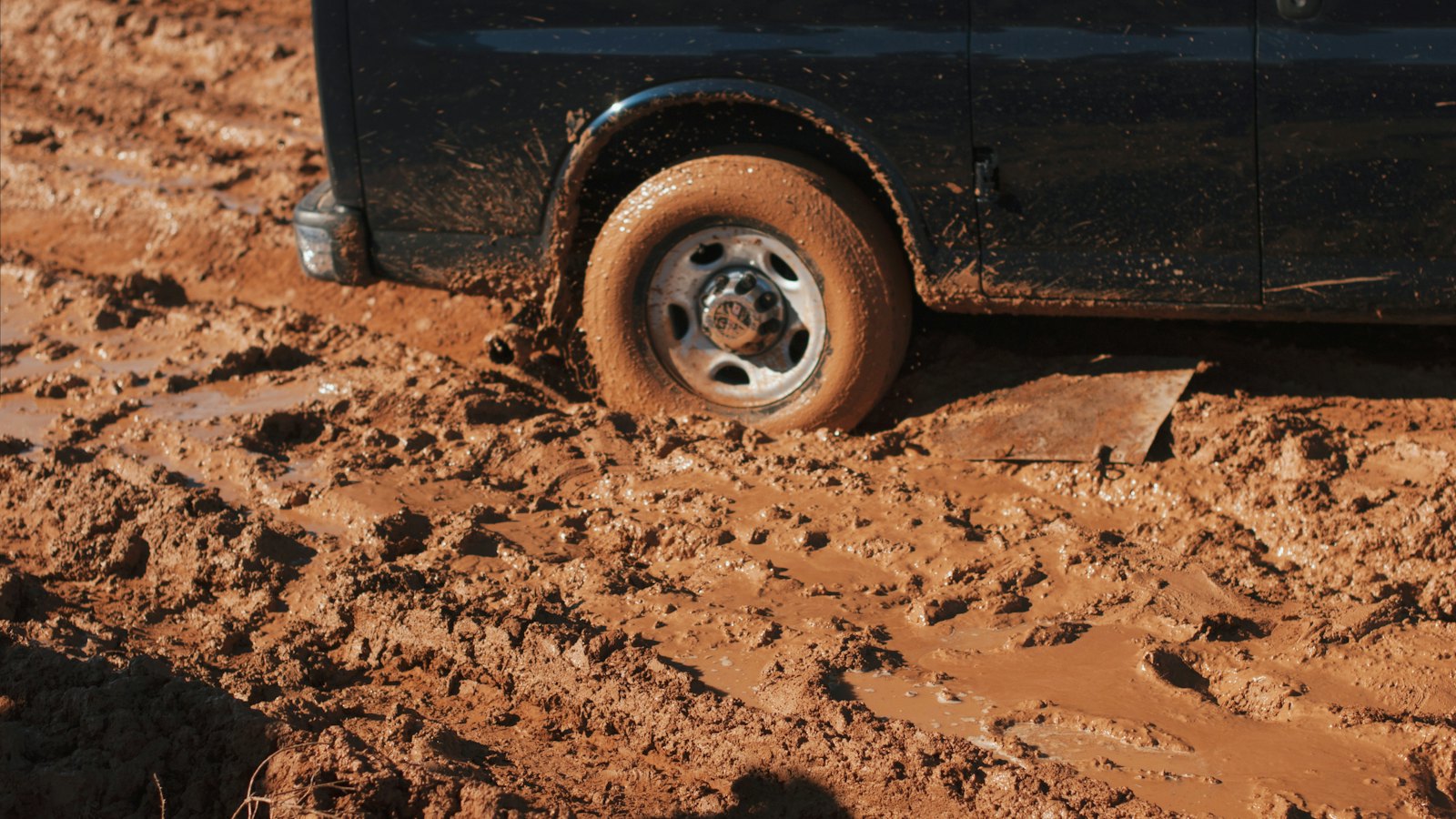
On a dry day, the sand roads and grassy shoulders around Lake Helen look solid enough to pull onto without a second thought. Then a tire drops off the pavement's edge, or a summer downpour turns a shoulder to soup, and a car that was moving fine a moment ago is buried to the hubs. It happens on the unpaved lanes near Cassadaga, at the boat ramps along the St. Johns River, and on the soft I-4 shoulder just south of town.
The instinct in that moment is to press the gas and power out. On sand or mud that is usually the worst thing you can do. This guide walks through what actually frees a stuck vehicle, in the order a professional would try it, and it flags the point where spinning the tires stops being a fix and starts being expensive.
The Short Version
- Stop accelerating the instant the wheels start to spin, because spinning digs the tire deeper and packs sand or mud around it.
- Figure out what you are stuck in before you touch the pedal again, since sand, mud, and a ditch each call for a different move.
- Traction under the drive wheels, not more throttle, is what gets most vehicles out.
- Rock the vehicle gently and only once or twice; repeated hard rocking overheats the transmission.
- When the frame is resting on the ground or the tires are buried, stop and call for a professional winch-out before you cause damage.
Step 1: Stop the Wheels the Moment They Spin
The first move is to lift off the gas. A spinning tire does not climb out of sand or mud; it digs in. Each rotation throws material out from under the tread and drops the wheel lower, and on soft ground the tire can polish the surface beneath it into a slick, glazed bowl that offers even less grip. The moment you feel the wheels break loose and the vehicle stop moving forward, take your foot off the accelerator.
Put the vehicle in park, set the brake, and get out to look. Thirty seconds of looking at where the tires actually sit will save you from the reflex that buries most cars: flooring it and hoping. If you are on or near a live road, such as the edge of I-4 or Lake Helen-Osteen Road, turn on your hazards and stay well away from moving traffic while you assess.
Step 2: Figure Out What You Are Stuck In
What is under your tires decides everything you do next. Dry, loose sand and wet, sticky mud fail in different ways, and a car dropped into a ditch is a third problem again. Look at how deep each tire has sunk, whether the vehicle's underside is resting on the ground, and which wheels actually drive the car.
Central Florida makes the sand problem worse than most places. The University of Florida's IFAS extension describes the uniformly sandy nature of Florida's mineral surface soils, and that loose, well-drained sand is exactly what a tire sinks through once it leaves firm pavement. In the wet season, the same ground turns to mud after an afternoon storm, so a shoulder that held your weight in the morning may not by evening.
If the belly of the car is sitting on sand or a ridge of dirt, the wheels may be barely touching down, and no amount of throttle will help until that weight is lifted. That is the clearest sign to skip ahead to a winch-out.
Step 3: Clear the Tires and Build Back Traction
Getting free is almost always about traction under the drive wheels, not more power. Start by clearing packed sand or mud away from the front and back of each drive tire so the wheel has somewhere to roll instead of a wall to climb. A small folding shovel helps; hands and a sturdy stick work in a pinch.
Then give the tires something solid to grip. Wedge the vehicle's floor mats, a couple of boards, branches, or gravel directly under and just ahead of the drive wheels in the direction you want to go. Purpose-made traction boards do the same job faster. Worn or underinflated tires make this stage far harder: the National Highway Traffic Safety Administration advises that tires should be replaced when the tread wears to 2/32 of an inch and that keeping them properly inflated preserves the grip that tread is there to provide.
- Clear sand or mud from in front of and behind each drive wheel.
- Lay floor mats, boards, branches, or traction boards under the drive tires.
- Point the front wheels straight ahead to cut rolling resistance.
- Ease onto the gas gently once traction is set, and never floor it.
Step 4: Try to Rock It Free, Gently and Briefly
If the tires have something to grip, a gentle rock can walk the vehicle out. With traction material in place, ease forward as far as the car will move, let it roll back, then ease forward again, building a little momentum each pass without spinning the wheels. Smooth throttle beats hard throttle every time.
Keep this short. Rocking a vehicle between drive and reverse builds heat fast in an automatic transmission, and a few minutes of hard rocking can do real damage that costs far more than the tow you were trying to avoid. If two or three careful attempts do not move it, stop. Pushing past that point rarely works and usually makes the situation worse.
Buried past the point where mats and rocking help? Call Lake Helen Towing at (386) 564-3081 and we will bring a winch and pull it out clean, without adding a dent to the bill.
Step 5: Know When to Call for a Winch-Out
Some situations are a winch job from the start, and forcing them only adds damage. If the frame or bumper is resting on the ground, if the tires are buried past the tread, if the car has slid into a ditch or a canal bank, or if you are stuck in a live traffic lane, stop trying to drive it out. A pull done wrong, with a chain hooked to the wrong point or a strap snapped under load, bends sheet metal and injures people.
This is what recovery equipment is built for. A professional winch-out is a slow, steady, controlled pull to firm ground with everyone kept well clear of the line, which is exactly how winch maker WARN's basic guide to winching describes a safe recovery. A tow operator reads the angle, picks a rated recovery point, and moves the weight the vehicle cannot move on its own, without the wheel-spin that digs a car in deeper. That is the difference between an off-road recovery and winch-out done by a truck and an afternoon spent making the hole bigger.
Where Drivers Get Stuck Around Lake Helen
West Volusia gives a vehicle plenty of places to leave firm ground. The unpaved lanes and grass shoulders around Lake Helen and Cassadaga are soft sand the moment you drop a wheel off the edge. The boat ramps and river access along the St. Johns and Lake Monroe pack wet sand that traps trailers and tow vehicles alike. And the shoulders of the I-4 corridor between Deltona and DeLand turn soft after heavy rain, so a driver who pulls fully off to deal with a flat can find the car will not climb back on.
The wet season, roughly June through September, is when most of these calls come in, because ground that reads as solid can be saturated an inch below the surface. If you regularly drive rural roads or launch a boat, a small shovel, a set of traction boards, and a tow strap in the trunk turn many of these into a five-minute fix instead of a wait for help.
When to Stop Trying and Make the Call
The single thing that decides how a stuck-vehicle story ends is how early you stop spinning the tires. The drivers who free themselves are the ones who lift off the gas the instant the wheels break loose, look at what they are stuck in, and build traction before touching the pedal again. The ones who end up with a cooked transmission or a car buried to the frame are the ones who kept their foot down. If your first careful attempts do not move it, the ground is winning, and more throttle only helps the ground.
When the car is truly buried, resting on its frame, or stuck somewhere unsafe, that is the moment to hand it off. Lake Helen Towing handles off-road recovery and winch-out across west Volusia, along with roadside assistance for the flats and breakdowns that put drivers on soft shoulders in the first place, a clean pull from a crew that knows these roads before a stuck car becomes a repair bill.
Stuck and Not Moving? We Will Pull You Out
Tell us where you are and what you are stuck in, whether it is sand, mud, a ditch, or a soft shoulder, and we will send a truck with the right recovery gear to Lake Helen and anywhere across west Volusia.
One Call Gets a Winch on the Way
Do not dig the hole deeper. Lake Helen Towing runs winch-outs and off-road recovery across Lake Helen, Cassadaga, Deltona, Orange City, DeLand, and DeBary, any hour of the day.
Call (386) 564-3081