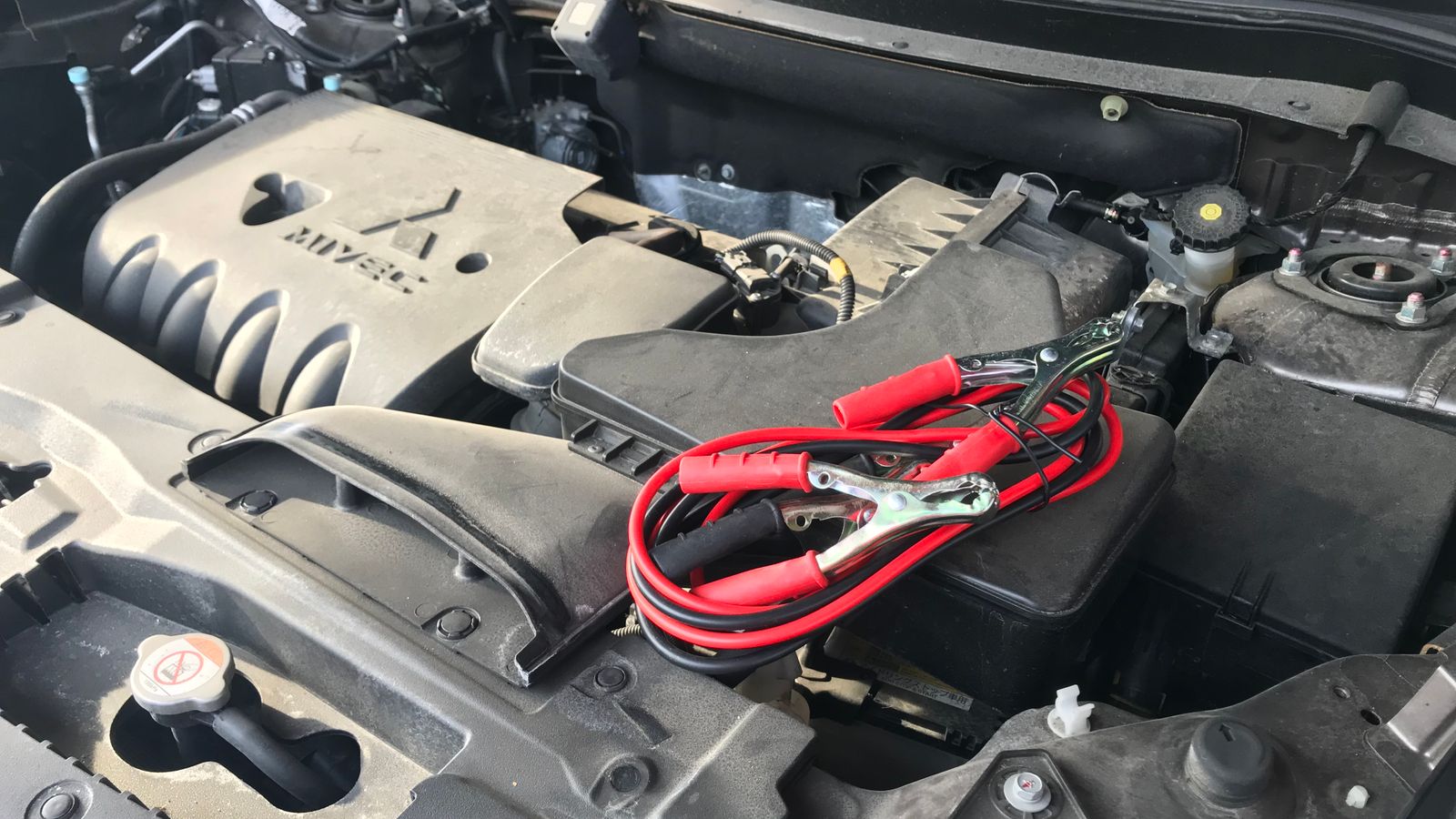
Dead Battery in Lake Helen: Do You Need a Jump-Start or a Tow?
A dead battery is the most common reason a car simply will not start, and most of the time a jump-start solves it in minutes. But a jump only works when a healthy battery has been drained, and sometimes the battery, the alternator, or the starter is the real problem, and no amount of jumping will get you home. Knowing which situation you are in saves you from either an unnecessary tow or a car that dies again a mile down the road.
Here is how to tell a jump-start problem from a tow-it-in problem, why Florida heat makes dead batteries so common around Lake Helen, and what to do when the jump does not hold. The short version: if the engine cranks and runs after a jump, you likely needed a jump; if it will not, or it strands you again, you need a shop and a tow to get there.
What a Jump-Start Actually Does
A jump-start feeds power from another battery to yours so the engine can turn over and start. Once the engine is running, the alternator takes over and recharges the battery as you drive. That is the whole mechanism, and it explains the catch: a jump only helps when the battery was simply discharged and everything else, including the alternator, the starter, and the battery's own ability to hold a charge, is still working.
So a successful jump is also a quick diagnosis. If the car starts and keeps running, the odds are you left a light on, took too many short trips, or have an aging battery that finally ran flat. If it will not start even with a solid connection, or dies again soon after, the battery was not the only thing wrong.
When a Jump-Start Is All You Need
A jump-start is usually enough when a good battery was drained by something outside the battery itself. Headlights or a dome light left on overnight, a door not fully shut, or weeks of short trips that never let the alternator fully recharge will all flatten a healthy battery. In those cases the car starts on the first solid jump and runs normally afterward.
After a jump like that, drive for a good stretch, twenty minutes or more of steady driving, rather than shutting the engine straight off, so the alternator can put charge back in. If the car starts on its own the next morning, the battery has recovered and you are back to normal.
- The engine cranks slowly, then catches and runs after the jump
- You can trace the drain to lights left on or a door left ajar
- The car has been sitting unused or making only short trips
- It starts on its own the next day after a longer drive to recharge
When You Need a Tow Instead
You need a tow when the problem is not a simply drained battery, because a jump cannot fix a component that has failed. A battery with a dead cell will not hold a charge no matter how many times it is jumped. A failing alternator will let the engine run briefly on the jump, then stall as the battery drains again. A bad starter often produces a single click and no crank even with strong power.
Repeated jumps are the clearest signal. If a car needs jumping again within a day, or dies as soon as the cables come off, continuing to jump it is not a repair; it is a delay. At that point the safe move, and the cheaper one in the long run, is to get it to a shop on a tow rather than risk being stranded somewhere worse.
- The car will not start even with a strong, correct jump connection
- It starts on the jump but stalls once the cables are removed
- It needs jumping repeatedly over a day or two
- You hear a single click, or rapid clicking, and no crank
- There is a burning smell, smoke, or heavy corrosion around the battery
Why Florida Heat Kills Batteries Early
Heat, not cold, does the most damage to a car battery, and Florida delivers plenty of it. High under-hood temperatures speed up the chemistry inside the battery and evaporate the fluid it needs, wearing it out faster than a battery in a milder climate. Corrosion builds on the terminals faster in that heat too, and a poor connection can mimic a dead battery even when the battery itself still has life. The Car Care Council advises that once a battery is three years old or more, drivers should consider replacing it because the chance of failure climbs, and a hot climate reaches that point sooner.
The failure itself, though, often shows up on the first cool morning. The National Highway Traffic Safety Administration notes that when the temperature drops, so does battery power, and gasoline engines need more of it to start. So a battery worn thin by a Volusia County summer may crank fine until the first cold snap, then quit, which is why NHTSA recommends having the battery and charging system checked before you actually need them.
Is It Safe To Jump-Start It Yourself?
Jump-starting is safe when it is done in the right order and risky when it is not. Connect the red clamps to the positive terminals on both batteries first, then one black clamp to the good battery's negative terminal, and the last black clamp to an unpainted metal ground on the dead car rather than its negative terminal, to keep any spark away from battery gases. Reverse the order to disconnect.
Skip it if you see a cracked case, leaking fluid, heavy corrosion, or a swollen battery, and never jump a frozen or visibly damaged battery. If anything looks wrong under the hood, or you are stopped somewhere unsafe like a live shoulder, calling for help is the better call than improvising with cables in traffic.
Jumped it twice and it still will not hold? Call Lake Helen Towing at (386) 564-3081 and we will get it to your shop before it strands you again.
Dead-Battery Questions From Lake Helen Drivers
How long should I drive after a jump-start?
Aim for at least twenty minutes of steady driving, and highway miles are better than stop-and-go. That gives the alternator time to put a meaningful charge back into the battery. If you shut the engine off after only a few minutes, the battery may not have enough to restart.
Can I just keep jump-starting it every morning?
You can, but you are managing a symptom rather than fixing the cause. A battery or charging system that needs a daily jump is failing, and it will eventually leave you stranded somewhere less convenient than your driveway. Have it tested and replaced instead of relying on the cables.
How do I know if it is the battery or the alternator?
A rough rule: if the car will not start at all but jumps easily and then runs, the battery is the likely suspect; if it starts on the jump and then dies while driving, the alternator is not keeping up. Watch the dashboard battery light and the headlights while driving, because lights that dim or a warning light that stays lit usually point to the alternator rather than the battery. A shop can test both in minutes, which is the only way to be sure before spending money on the wrong part.
My car is a hybrid or EV. Can I jump it?
A hybrid has a small 12-volt battery that can be jumped much like a regular car's, but the high-voltage drive battery must never be jumped. Fully electric vehicles generally should not be jump-started to move them and are best transported on a flatbed. When in doubt, check the owner's manual or have it towed.
Does Lake Helen Towing cover my area for a jump or a tow?
Yes. Lake Helen Towing serves Lake Helen, Cassadaga, Deltona, Orange City, DeLand, DeBary, DeLeon Springs, and Enterprise, whether you need a quick jump-start on the roadside or a flatbed to get a no-start vehicle to a shop.
A Jump That Won't Take Means a Tow
Tell us whether it cranks, clicks, or does nothing at all, and we will bring a jump or a flatbed to your spot in Lake Helen or anywhere across west Volusia.
Back on the Road, or Onto the Flatbed
Whether it needs a two-minute jump or a lift to the shop, the fix starts with one call. Lake Helen Towing covers Lake Helen, Deltona, Orange City, DeLand and the rest of west Volusia County.
Call (386) 564-3081