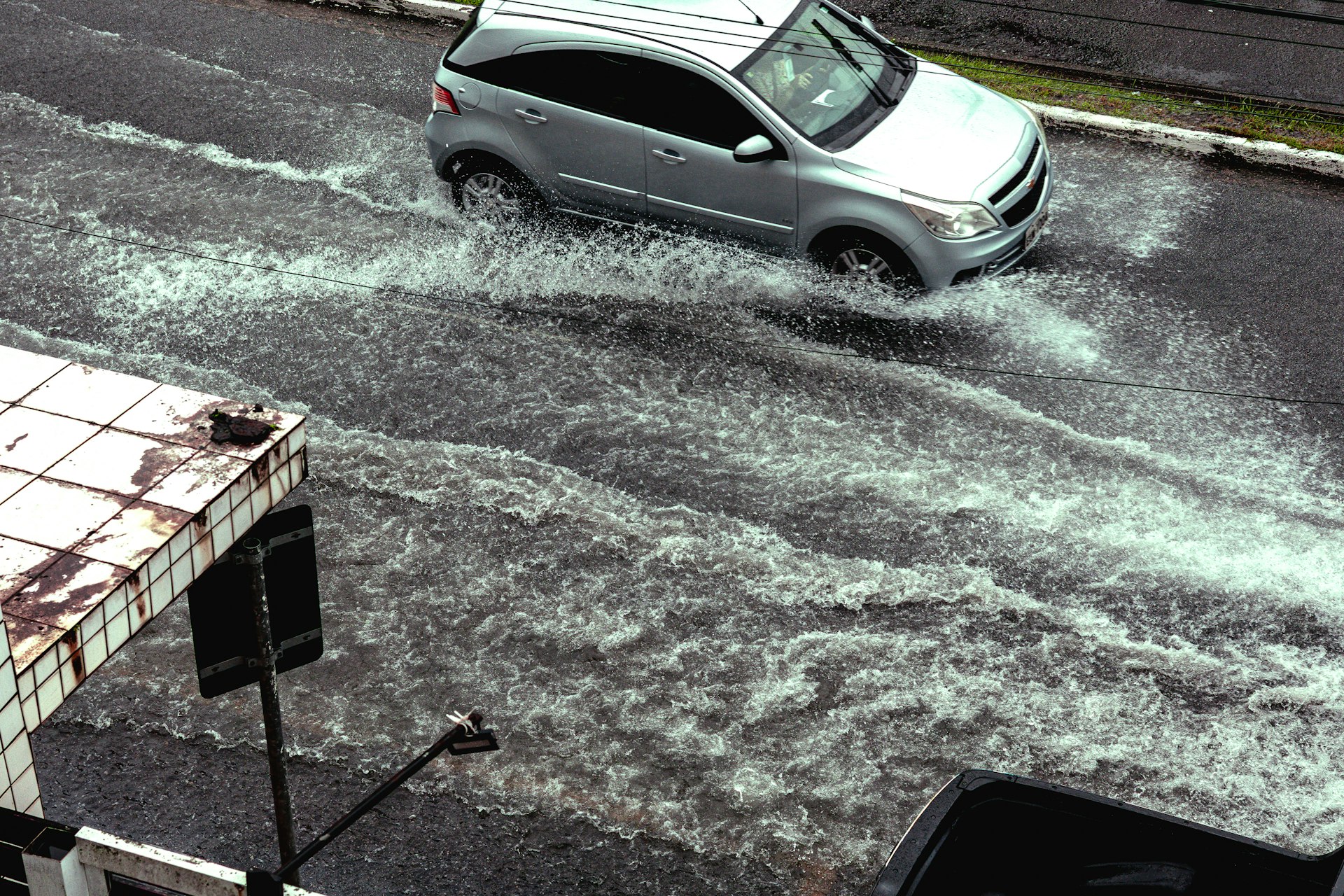
Flooded Car in Volusia County? What To Do Before You Turn the Key
The National Weather Service puts the number at 12 inches. That is all the rushing water it takes to carry away most cars, and about 2 feet for an SUV or truck. A flooded car in Volusia County rarely starts with anything that dramatic, though: a low spot on a side street, a parking lot that drains slowly, a storm that parks over west Volusia longer than the forecast said it would.
What you do in the first hour afterward decides a lot. The difference between a dried-out interior and a total loss is usually one decision, and it is almost always the decision to turn the key.
Moving Water Takes a Car Sooner Than Drivers Expect
Twelve inches of rushing water is enough to carry away most cars, according to the National Weather Service's Turn Around Don't Drown guidance, and 2 feet is enough for SUVs and trucks. The same guidance notes that 6 inches of fast-moving flood water can knock over an adult on foot.
Standing water hides everything underneath it. You cannot see a washed-out shoulder, a missing manhole cover, or how deep the dip in the road actually goes, and a flooded roadway at night gives you no depth cues at all. The safe move is the boring one: turn around and find another route.
- Do not drive into water of unknown depth, even on a road you use daily
- Do not walk out to a stranded vehicle through moving water
- Do not move barricades to get through a closed road
- Treat a flooded road at night as deeper than it looks
Starting a Flooded Car Is the Mistake That Costs the Most
Do not start a vehicle that has been sitting in water. NHTSA's guidance for flood victims is to assess the vehicle thoroughly before starting it up, because there can be damage that is not visible from outside.
The reason is mechanical and unforgiving. An engine can compress air, but it cannot compress water, so water drawn into the intake can wreck internal components the moment the engine turns over. A car that might have been dried out and repaired becomes a much larger bill, and that damage happens in the first second of cranking.
The same applies to testing the electronics. Powering up a soaked wiring harness to see what still works can turn a salvageable module into a dead one. Leave it off, and leave the ignition alone until someone has actually looked at it.
Hybrids and EVs Need Extra Distance, Not Just Extra Care
A flooded hybrid or electric vehicle is a shock and fire risk, and NHTSA's instruction is to keep it well away from buildings. The agency states that hybrid and electric vehicle batteries are highly corrosive and should not be exposed to standing water, and that flooded vehicles may have high voltage and short circuits that can shock and cause fires.
The specific rule is a distance one. NHTSA says not to park a damaged vehicle with a lithium-ion battery in a garage, or within 50 feet of your house or other structure, another vehicle, or combustibles, and to contact your dealer if you suspect the battery has been damaged.
Fifty feet rules out most driveways and nearly every carport. In practice that means a flooded EV has to be moved somewhere open, and it has to be moved by someone other than you driving it there.
Water up to the sills and you do not want to crank it? Call Lake Helen Towing at (386) 564-3081 and we will move it on a flatbed without the engine ever turning over.
The Water Line Tells You What You Are Dealing With
How high the water reached is the single best early indicator of severity. Water that stayed below the door sills is largely an underbody and carpet problem. Water that reached the seat cushions, the dashboard, or the airbag modules means electrical systems were submerged, and that is where repair costs stop being predictable.
Look for the evidence before anything gets moved or cleaned. A silt line inside the door jamb, damp padding under the floor mats, condensation inside the headlight housings, and a waterline on the seat fabric all record how deep it got.
Photograph all of it, including the exterior and the surroundings, before the vehicle is towed. Those photos are what your insurer works from, and the scene will not look the same tomorrow.
A Flooded Car Should Move on a Flatbed
A flatbed is the right truck for a flood-damaged vehicle because it carries the car with all four wheels off the ground. Nothing in the drivetrain has to turn, the engine never runs, and a car with soaked brakes or seized components is not being dragged down the road to find out what still works.
Tell the dispatcher three things when you call: how deep the water got, whether the vehicle is a hybrid or EV, and where it needs to go. Those answers decide the equipment that shows up and, for an electric vehicle, where it is safe to set the car down at the other end.
Lake Helen Towing runs this service across Lake Helen, Cassadaga, Deltona, Orange City, DeLand, DeBary, DeLeon Springs and Enterprise, including the I-4 corridor from the Debary Avenue exit up through the SR 44 interchange.
Florida Brands a Totaled Flood Vehicle on Its Title
If the insurer declares the car a total loss because of water damage, that outcome follows the vehicle permanently. Florida Statute 319.14 defines a flood vehicle as a motor vehicle or mobile home that has been declared a total loss due to water damage, and treats it alongside rebuilt and assembled vehicles for titling purposes.
The statute also requires disclosure. A seller must tell any purchaser, customer, or transferee that the vehicle is a flood vehicle, and the law bars transferring such a vehicle without a proper title application and a physical examination by the department to verify the vehicle and its major component parts.
That matters in both directions. If your car is written off, the flood brand is part of what you are handing over; if you are shopping for a replacement after a storm, it is the disclosure you should be asking to see.
Common Questions About Flooded Cars in West Volusia
Can I drive the car if it starts and seems fine?
Not until it has been inspected. Brakes, wheel bearings, and electrical connectors can all be compromised by submersion without any symptom on a short drive, and NHTSA's point about damage that is not visible applies exactly here. A car that starts is not the same as a car that is safe.
How quickly does flood damage get worse?
Quickly enough that waiting is not neutral. Water sitting in carpet padding and body cavities drives corrosion and mold growth in a warm Florida vehicle, so the sooner it is out of the water, opened up and assessed, the more options stay on the table.
Is flood damage covered by insurance?
Flood damage is generally handled under comprehensive coverage rather than collision, but only your policy and your insurer can confirm what applies to your vehicle. Call the claim in before authorizing repairs, and ask where they want the car taken.
Where should a flooded car be towed?
Usually to the shop or storage yard your insurer names, or to a repair shop you already trust. For a hybrid or EV, it needs somewhere open that satisfies the 50-foot separation NHTSA describes, which is worth settling on the phone before the truck arrives rather than in your driveway afterward.
Do Not Let the Ignition Decide It
Tell us how deep the water got and whether the vehicle is a hybrid or EV, and we will bring the right truck and set it down somewhere it belongs.
Move It First, Assess It Second
The damage you can see is rarely the whole bill, and the first turn of the key is where a repairable car becomes a total loss. Lake Helen Towing covers Lake Helen, Cassadaga, Deltona, Orange City, DeLand, DeBary, DeLeon Springs and Enterprise.
Call (386) 564-3081