Long-Distance Towing vs. Auto Transport: How to Move a Car From Lake Helen
Sooner or later a car has to go somewhere a local tow cannot reach. A student leaves for a campus eight states away. A seasonal resident flies north in April and leaves the sedan in the driveway. A transmission lets go outside Macon on the drive home. Each time the same question comes up: book a long-distance tow, or hand the car to an auto transport carrier?
They are not the same service, and the better choice shifts with the car's condition, your deadline and where it is going. Here is what each one actually is, how the money is built, what protects the car in transit, and which fits a move starting in or ending at Lake Helen.
A Long-Distance Tow and an Auto Transport Are Not the Same Service
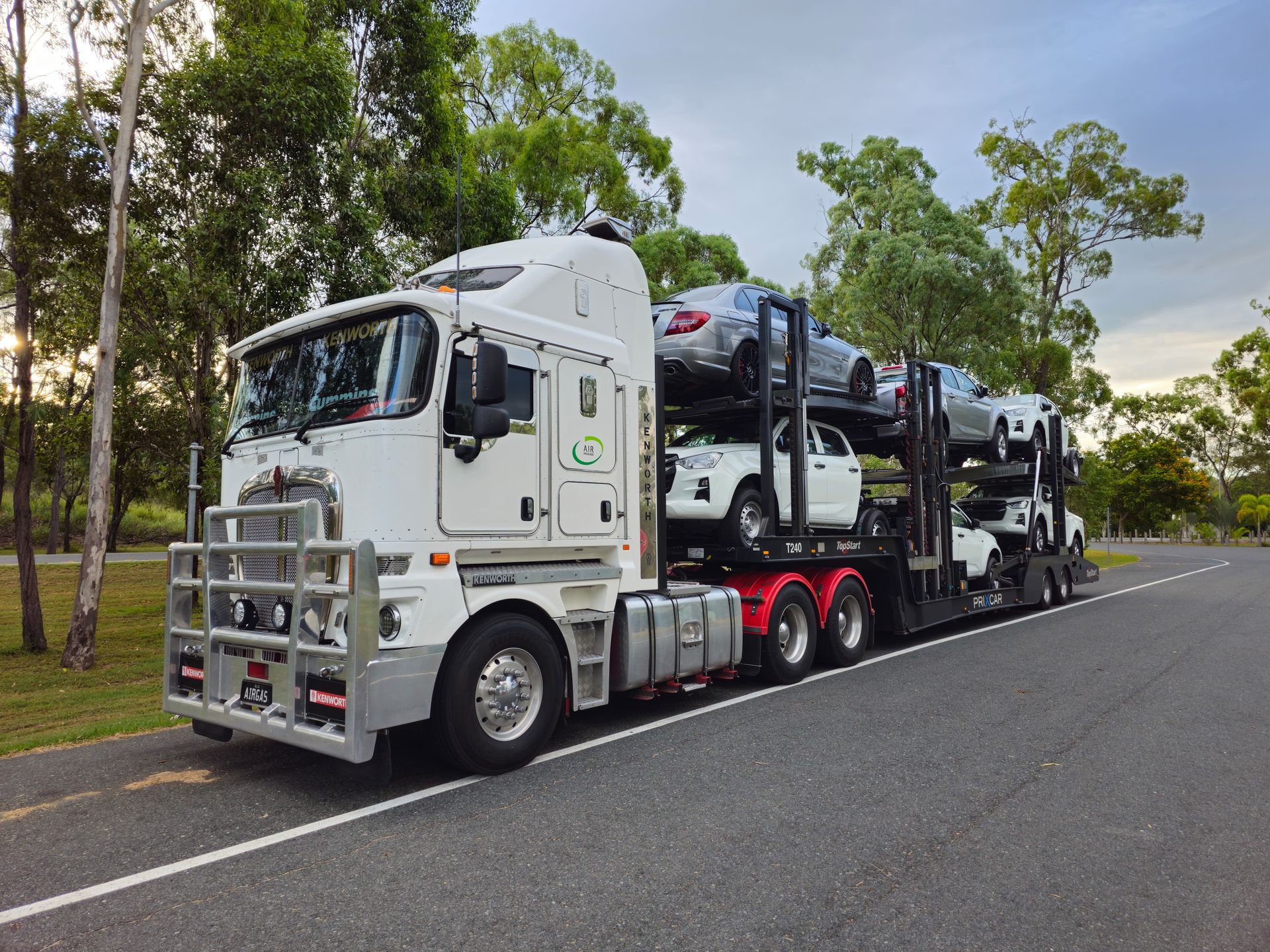
A long-distance tow is one truck dedicated to your vehicle for the whole trip; an auto transport is your vehicle riding as one of several on a multi-car carrier. That single difference drives the price, the schedule, the handling, and who you end up dealing with.
A tow operator sends a truck, loads your car and drives it to the destination. Nothing else is on the deck, so the route is yours and the arrival is a time, not a window. A carrier runs a route instead: your car rides alongside seven to nine others and comes off when the truck reaches your area.
Transport also has a middleman that towing does not. Many companies advertising car shipping own no trucks; they take your order, post the load, and assign it to a carrier you have not met. The company you paid and the company handling your car can be two different businesses.
Flatbed, Wheel-Lift and Dolly Behave Differently Over Distance
The flatbed is the only method that keeps all four wheels off the pavement, which is why it is the default for a long haul. A wheel-lift raises one axle and lets the other roll; a dolly does the same with small wheels under the lifted end. Both are fine across town. Across several hundred miles, the rolling axle collects heat, wear and odometer the whole way.
Whether a car can safely roll on two wheels depends on its drivetrain, and the owner's manual settles that, not the operator's preference. All-wheel-drive vehicles are the clearest case: with one axle turning and the other still, a center differential or transfer case can be damaged on a trip a front-wheel-drive car would shrug off.
A Car That Will Not Start Narrows the List Fast
A non-running vehicle is the single fact most likely to decide this for you. Carriers can take non-runners, but not all will, and those that do charge extra and need notice: loading a dead car onto a multi-level trailer means a winch, a clear deck position and time at a stop where other cars are waiting.
Tow trucks are built for exactly this. The bed tilts, a winch pulls the car up, and nothing about the job is unusual. Ask the sharper version of the question when you book: not "do you take non-running cars" but "does the assigned truck carry a winch, and does the car need to roll and steer?" A dead battery and a seized steering column are very different loading problems.
How Long-Distance Tow Pricing Is Actually Built
Long-distance tow pricing comes from four inputs: a hook or base fee for the call-out and load, a rate for the loaded miles, the vehicle's weight class, and deadhead, meaning the empty miles the truck runs to reach you and sometimes to get back. Deadhead is the piece most people have never heard of, and the one that explains quotes that look inconsistent.
Carriers price from a different starting point. Your car is a share of a route the truck runs anyway, so a vehicle moving between two large metros can ship for less per mile than a short regional tow. What you give up is control of the calendar.
Either way, insist on a total rather than a rate, in writing, before dispatch. Lake Helen Towing quotes long-distance towing as one agreed flat rate set before the trip begins instead of a per-mile meter, which takes the deadhead arithmetic off the customer entirely.
Comparing the Two Where It Actually Matters
Five differences separate these services in practice, and only one of them is price.
- Timing: a tow is a scheduled pickup and a direct drive; a transport gives you pickup and delivery windows, each often measured in days.
- Handling: a tow loads the car once and unloads it once; on a multi-level carrier it may be repositioned as other vehicles come off.
- Non-runners: routine for a tow truck, a surcharge and a scheduling constraint for most carriers.
- Accountability: with a tow it is the company you called; with a brokered transport, a carrier assigned after you paid.
- Distance economics: towing stays competitive under roughly 300 to 500 miles; beyond that a shared route usually wins on price alone.
Four of those five are about control, not cost. If you need the car on a named day, or it does not run, or it is going where no carrier route passes, a tow is often the right instrument even when it is not the cheaper one.
Moving a car out of Lake Helen and not sure it should roll on its own wheels? Call Lake Helen Towing at (386) 564-3081 for a flat quote on a flatbed run, in state or across the line.
Your Car Travels as Freight, and the Paperwork Is the Protection
Whoever moves your car is carrying it as freight, and federal law places the liability on the carrier rather than on your own auto policy. Under 49 U.S.C. section 14706, a motor carrier must issue a receipt or bill of lading for property it accepts and is liable for the actual loss or injury to that property.
The bill of lading and its condition report are signed at pickup and again at delivery, and the gap between those inspections is the claim. Photograph all four corners, the roof and the glass in daylight at both ends before signing.
Securement is regulated too. Federal rules at 49 CFR 393.128 require automobiles, light trucks and vans to be restrained front and rear with a minimum of two tiedowns, attached at the mounting points the manufacturer designed for that purpose.
Anyone moving a vehicle across state lines for hire is a registered interstate motor carrier. The federal SAFER Company Snapshot is a free public record of a company's identification, size and safety record, searchable by USDOT or MC number. Ask for the number of the carrier that will physically have your car, not the broker's.
What Decides It for a Move In or Out of West Volusia
Lake Helen sits on the I-4 corridor between Deltona and DeLand, and that shapes the answer more than people expect. I-4 is a heavily run carrier lane, so a car bound for Atlanta or the Carolinas is already on a route transport trucks travel daily, which is where shared-route pricing is hard to beat. The cases that lean the other way are common around here.
- Seasonal residents heading north in spring who need the car collected on a set day, not inside a week-long window.
- Students at Stetson University in DeLand, six miles up the road, moving a car at the start or end of a term.
- A breakdown far from home, where the car already needs a flatbed and a tow can usually be arranged the same day.
- Project cars and auction buys with title paperwork a carrier will not easily accommodate.
- Anything moving inside Florida, where the distance rarely grows long enough for shared-route economics to apply.
Relocation adds a deadline that has nothing to do with the truck. Florida requires new residents to insure, title and register their vehicles within 10 days of establishing residency, and residency is triggered by something as ordinary as starting a job or enrolling a child in school. If the car is still in Ohio on day nine, that clock is running.
What to Have Ready Before the Truck Arrives
- Empty the cabin and trunk; belongings are not covered as freight.
- Leave about a quarter tank of fuel, enough to load and unload without hauling dead weight.
- Disable the alarm, or hand over the instructions, so it does not flatten the battery mid-route.
- Fold the mirrors, pull toll transponders and roof racks, and secure loose trim.
- Have a key ready, and confirm who will sign the delivery inspection.
If the car does not run, say so when you book, not when the truck pulls up. That one sentence changes the equipment dispatched, and withholding it is the commonest reason a pickup gets rescheduled.
The Mileage Is Rarely What Decides It
Distance is the first thing people raise and the last thing that should settle this. The honest test is not how far the car is going but how much of the outcome you need to control. If it runs, the destination sits on a well-travelled lane, and you can live with a pickup window, a carrier will usually cost less. If it will not start, if a specific date matters, or if the destination is somewhere no route naturally passes, a dedicated truck is the tool built for that, and the price difference is buying a schedule you set rather than one you are handed.
When the move starts on this side of I-4 and the car is not driving itself anywhere, Lake Helen Towing handles long-distance towing out of Lake Helen and west Volusia on a flatbed, quoted flat before the truck rolls.
Getting a Car Out of West Volusia?
Tell us where the car sits, where it needs to end up, and whether it still runs. We will map the route and come back with one flat rate for a flatbed haul, inside Florida or across the state line.
Sources
- Cornell Law School Legal Information Institute - 49 U.S.C. 14706: liability of carriers under receipts and bills of lading
- eCFR - 49 CFR 393.128: specific securement requirements for automobiles, light trucks and vans
- Federal Motor Carrier Safety Administration - SAFER Company Snapshot (public motor carrier lookup)
- Florida Department of Highway Safety and Motor Vehicles - New Resident titling and registration requirements
One Truck, One Trip, One Rate
Whether the car is leaving Lake Helen for the season or coming home from a breakdown three states away, we run it on a flatbed at a rate agreed before we load.
Call (386) 564-3081