
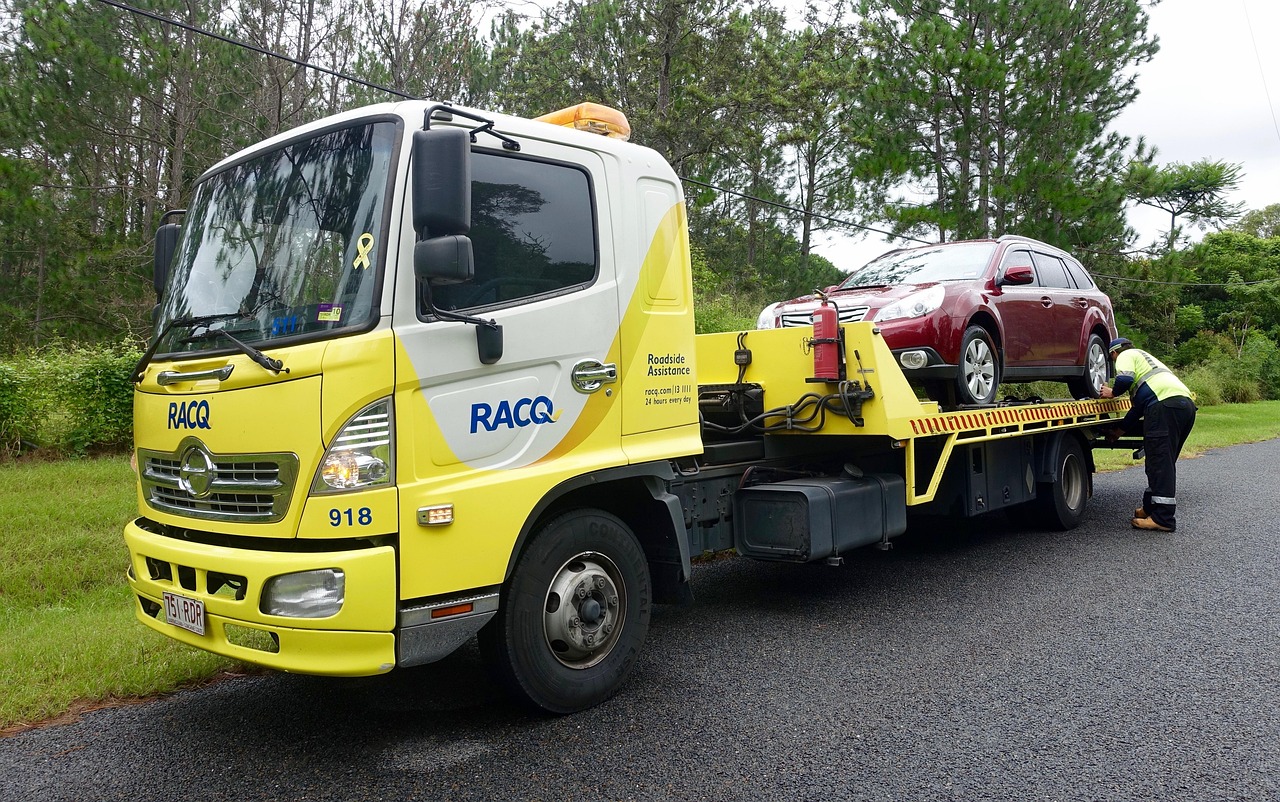
Roadside Assistance vs. Calling a Tow Truck: What Each One Covers in Lake Helen
Two phone numbers can get a disabled car moved, and they are not the same product. One is a benefit you already pay for, whether that is a motor-club membership, a roadside rider attached to an auto policy, a perk bundled with a credit card, or a program that came with a new-vehicle warranty. The other is a towing company you call yourself.
The difference matters most at the moment you are least equipped to research it. What follows is how each path is actually built, the contract terms that decide what a benefit will pay, and the situations in rural west Volusia County where calling an operator directly is simply the shorter route.
A Roadside Benefit Is a Promise to Arrange and Pay, Not a Truck
A roadside assistance benefit is a service contract that promises to arrange a tow and pay part of it, not a towing company. Whichever form yours takes, the organization behind it almost never owns the truck that shows up. It keeps a network of local operators, takes your call, assigns the job to one of them, and settles the bill up to whatever limit the agreement sets.
Florida law draws that line explicitly. Under section 624.124 of the Florida Statutes, a company may provide “towing service” and “emergency service” for “fees, dues, or other consideration” without being deemed an insurer or falling under the Insurance Code at all. A membership-style roadside plan is therefore a contract for services, and what you are owed is whatever that contract says you are owed.
An insurance rider is a different instrument with a similar practical shape. Florida’s Department of Financial Services describes Towing and Labor coverage as providing “coverage for emergency road service (at the scene) and towing up to the limits shown on the policy.” The operative phrase is the last one. The limit is a number on your own declarations page, not an industry standard.
Calling a Tow Company Directly Is One Transaction With One Party
Calling a towing company directly removes every intermediary from the job. You describe the vehicle and where it sits, the dispatcher quotes the work, an operator employed by that company drives out, and you pay for the tow when it is finished.
What you are buying is specific: the right equipment, an operator who can use it, and a destination of your choosing. Nobody has to authorize the job except you, and nothing is checked against a membership record before a truck is assigned. If the car needs a flatbed rather than a wheel-lift, that is a dispatch decision made on the phone rather than a coverage decision made somewhere else.
The trade is equally specific. You pay the market price for the job instead of a capped share of it. On a short in-town move that gap may be small; on a long haul it will not be. Emergency towing and a planned shop transfer are also priced differently, so the quote depends on what you are genuinely asking for.
Five Contract Terms Decide Whether a Benefit Helps You Today
Five contract terms decide almost everything about whether a roadside benefit helps in a given breakdown, and all five are knowable long before anything goes wrong.
- Covered mileage: the number of miles the plan pays for, measured from where the car sits. Miles past the cap are usually billed to you at the operator’s rate.
- Service calls per term: many plans limit how many events a membership covers in a year, and some count a jump-start or a tire change against the same total as a tow.
- Who dispatches: a benefit administrator assigns your job to a network operator, which puts a handoff between your call and a truck.
- Who picks the destination: some plans pay only to the nearest qualifying facility or an affiliated shop, not to the mechanic you would have chosen.
- Pay-direct or reimburse: some plans settle with the operator at the scene, and others expect you to pay in full and claim the money back afterwards.
None of those terms are hidden. They sit in the membership agreement, the policy declarations, the credit-card benefit guide or the warranty booklet, and reading them takes less time than one roadside wait. The destination rule is the one worth checking first, because it is the term most likely to leave a fully covered tow with your car somewhere you did not want it.
Recovery and Towing Are Different Jobs, and Plans Price Them Apart
A tow and a recovery are different jobs, and many plans price them apart. A tow moves a vehicle that is already on a drivable surface and can be hooked or winched straight onto a deck. A recovery is the work of getting a vehicle back to that surface first, out of soft sand, off a shoulder it has slid down, or free of a ditch.
Plans commonly cap recovery tightly or exclude it, because the labor is unpredictable and occasionally needs a second truck. A benefit that comfortably covers a tow from a paved driveway may cover very little of a winch-out from a sand track behind a house. That is winch-out and off-road recovery work, quoted as its own job.
The distinction lands harder here than it would in a city. Lake Helen’s own Public Works department lists roads and sidewalks among its responsibilities and carries out gravel street work year round, and the city has no sewer system, so septic permits run through the Volusia County Health Department. That is part of why lots here are large and driveways long. A fair number of local addresses end in sand, a narrow culvert crossing, or a turnaround a loaded flatbed cannot physically use.
Not sure whether a winch-out counts as a tow on your plan? Call Lake Helen Towing at (386) 564-3081 and describe the surface the car is sitting on before you authorize anything.
A Reimbursement Claim Is a Paperwork Job
A reimbursement plan pays you back after the fact, which makes the receipt do more work than the tow did. Expect to need an itemized invoice naming the towing company, the date, the pickup and drop-off addresses, the vehicle, the reason for the service, and proof that you paid it, submitted inside whatever window the agreement sets.
Ask those questions before you need the answers. The Federal Trade Commission’s guidance on auto warranties and service contracts puts one of them plainly: “How much — if anything — will it pay for towing or related rental car expenses?” That is the right question for a warranty-bundled program or an add-on service contract, and it is worth putting to a credit-card benefit as well.
If a roadside claim on a Florida-issued policy is denied and the carrier will not move, the state’s Division of Consumer Services accepts consumer concerns about claim disputes and coverage issues. It is worth knowing the edge of that help: the Division states that it cannot compel a company to pay a claim where no law, rule or policy provision has been violated.
This is general information about how these programs are structured, not legal or insurance advice. The only terms that govern your situation are the ones printed in your own agreement, policy or warranty booklet.
Why a Direct Call Is Often the Shorter Route in West Volusia
Geography changes the calculation here. Lake Helen is a small city in west Volusia County, with the unincorporated community of Cassadaga immediately south of it, Orange City and Deltona to the southwest, and DeLand, the county seat, a few minutes north. Several practical things follow from that.
A national call center works from an address or a dropped pin, and stretches of the county road network between those towns have thin cell coverage and no shoulder lighting after dark. Those are awkward conditions for an app-based benefit and a verification step. A local dispatcher can work from a landmark, a cross street, or a direction of travel instead.
The nearest unambiguous interstate reference for much of this area is an I-4 exit number, and on the state’s published exit list for the corridor, exit 116 is Orange Camp Road. An exit number only helps if the person taking the call knows the corridor.
The handoff itself also costs time. Every added step, from the benefit’s call center to its network assignment to the operator’s own queue, is another place the job can sit. Calling a company that dispatches its own trucks across Lake Helen and the surrounding area removes one of those steps. It does not remove traffic, weather, or an access problem at either end, and no honest operator will tell you otherwise.
Read the Benefit Before the Breakdown, Not After
The useful move is not picking a side in advance. It is spending ten minutes with paperwork you already have. Find four numbers, covered miles, service calls per term, whether recovery is included, and whether the plan pays the operator or pays you back, then write them somewhere you will still find them with a dead car and a low phone battery. With those four in hand, the decision on the day stops being a guess: if the covered miles reach the shop you want and the car is sitting on pavement, use the benefit; if they do not, or the car is off the surface, a direct quote is the faster answer.
When a job falls outside what a plan will carry, Lake Helen Towing handles emergency towing and winch-outs and off-road recovery across Lake Helen, Cassadaga and the surrounding west Volusia communities.
Want a Real Number to Compare Against Your Plan?
You do not have to settle the coverage question before the car moves. Tell us where it sits, what it is, and where it needs to go, and we will quote the job directly so you can weigh it against whatever your membership, rider or warranty program allows.
Sources
- Florida Statutes s. 624.124 - Motor vehicle services; exemption from the Insurance Code, including towing service and emergency service
- Florida Department of Financial Services - Personal Automobile Insurance Overview: Towing and Labor coverage
- Federal Trade Commission - Auto Warranties and Auto Service Contracts: questions to ask about towing coverage
- Florida Department of Financial Services, Division of Consumer Services - Get Insurance Help: claim disputes and the limits of state assistance
Know the Limits, Then Know Who to Call
Mileage caps, recovery exclusions and reimbursement windows are worth reading before a breakdown, not during one. When the job falls outside them, or you would rather deal straight with the operator doing the work, Lake Helen Towing serves Lake Helen, Cassadaga, Orange City and DeLand.
Call (386) 564-3081