
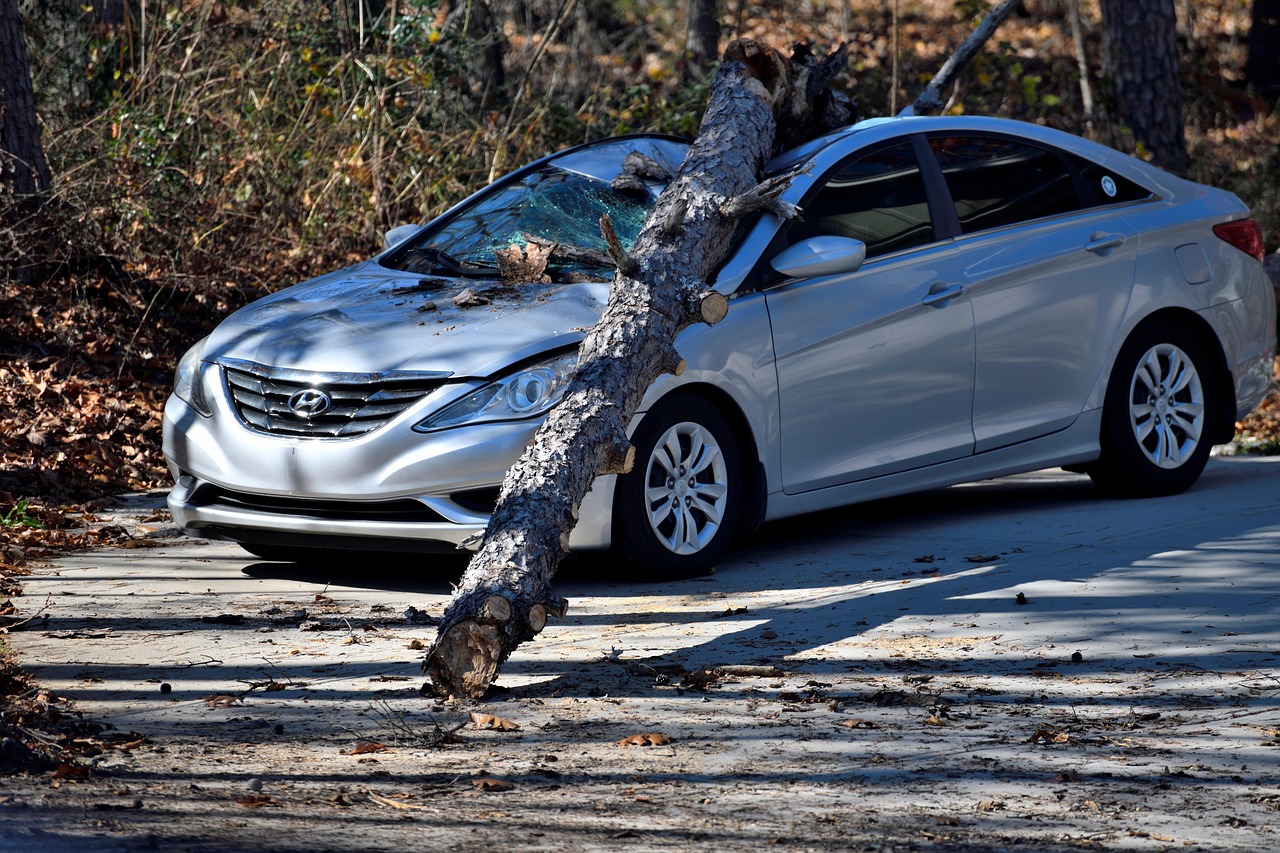
A Tree Fell on Your Car in Lake Helen? What To Do Before Anything Moves
A storm moves through west Volusia and the damage is never spread evenly. One street loses a scatter of small limbs; the next loses a water oak across two driveways and whatever was parked underneath. When a tree fell on your car overnight, what to do in the first hour has little to do with the car.
Getting a vehicle out from under a fallen tree is its own job, and it is not the same job as a tow. What follows is the order the work happens in, why one wire near the scene stops everything, and what the road and the driveway decide about which truck can reach the car.
Step 1: Assume Every Wire Near the Car Is Live
Treat every line in or around a fallen tree as energized, including the ones that look like phone or cable wire. A tree takes whatever it was touching down with it, and a span buried in the canopy is rarely identifiable from the ground.
OSHA's fact sheet on downed electrical wires instructs readers to "always consider all electrical equipment, lines and conductors to be energized" and to "never go near a downed or fallen electric power line." It also warns that voltage spreads outward through the ground from the point of contact, so the hazard is wider than the wire itself.
If somebody is inside the vehicle and a line is touching it, the same sheet says to "remain calm and do not get out unless the vehicle is on fire." Leaving means jumping clear so no part of you touches car and ground at once, landing with both feet together, then shuffling away in small steps.
The CDC's guidance for after a tropical storm tells people to "stay clear of fallen power lines" and to "call the electric company to report them." Until the utility confirms the span is dead, nobody works the scene: not a tree crew, not a recovery operator, not you. A winch cable and a steel boom are excellent conductors.
Step 2: Photograph the Scene Before a Single Branch Moves
Photograph everything before anything is cut or lifted, because the recovery erases the evidence of what happened. Once the limb is off the roof and the car is on a deck, the only record of how it landed is what you captured first.
Work outward from the car: wide shots holding the whole tree and the whole vehicle in one frame, then the point where the trunk bears on the body, then the close work on crushed panels and what is pinned underneath.
- Get a street sign or house number into at least one frame
- Capture the tree base and the direction of fall, not just the damage
A winch, a lift and a set of straps leave their own marks on sheet metal, and so does a limb dragged sideways off a roof. Photographs taken before the work starts are what separate storm damage from recovery damage. This is general information, not legal or insurance advice.
Step 3: Work Out Who Owns the Obstruction
Who clears a fallen tree depends on where it came to rest, not whose yard it grew in. That decides whether a public crew is coming at all, and it is worth settling before anybody waits on one.
Inside the city limits, Lake Helen's Public Works department lists Roads & Sidewalks and Trees among its responsibilities, and its ongoing street work includes gravel street work, downed trees and pothole filling alongside right-of-way mowing. A tree across a city street or in the city right-of-way sits in that department's territory.
On a county-maintained road the call goes elsewhere. Volusia County's Road and Bridge division describes its work as "asphalt repair, mowing, drainage, dirt road maintenance, tree removal work" plus bridge maintenance, and asks residents to report right-of-way problems, tree problems included, to the area office for their part of the county; the northwest office covering the DeLand side answers at 386-822-6422.
A private driveway is different, because no public crew is coming for it. One tree can straddle both: crews clear the travel lanes and the right-of-way and stop there, which leaves the half of the trunk lying on a car in a driveway exactly where it fell. That half is where a recovery operator comes in.
Not sure whether what is sitting on your car is a tow, a winch-out or a tree job? Call Lake Helen Towing at (386) 564-3081, describe what is on the vehicle and what the driveway looks like, and we will tell you which of the three it actually is.
Step 4: A Car Under a Fallen Tree Is a Recovery, Not a Straight Tow
A tow moves a vehicle that is already free; a recovery is the work of making it free first. A car under a tree is squarely the second, and the difference shows up in the equipment, the time and the way the job is quoted.
The first problem is stored energy. A limb bent across a roof, a trunk propped on a fence, a half-uprooted tree still hinged at the base: each is holding load, and cutting the wrong section first lets the rest move somewhere nobody predicted. Relieve the load, clear enough timber to open a path, winch or lift the car out from under what remains, then load it.
The second problem is that the car cannot help. Doors that will not open, a roof pressed onto the seats, wheels pinned under limbs and steering locked mean it does not roll, steer or get pushed. Most are dragged onto a deck rather than driven onto one, which is why flatbed towing and winch work tend to arrive together.
Pricing follows the same logic. A straight tow is quoted largely on distance and vehicle class, while winch-out and off-road recovery is quoted on labor, equipment and how much has to be cleared first. Cutting enough tree to free a car is also not the same scope as felling and hauling the whole tree away.
Step 5: Describe the Access, Not Just the Address
An address tells a dispatcher where you are; the access tells them what they can usefully send. After a storm those are different questions.
Distance stops predicting much once streets are blocked. One downed tree two streets over can close the only approach a loaded flatbed can use, while a pickup slips through a gap the truck cannot. Lake Helen sits between Cassadaga to the south and DeLand to the north, so a crew coming from a different direction often finds a different set of streets open.
The driveway matters as much as the street. Lots here run deep, driveways run long, and the city's own street maintenance includes gravel work year round, which tells you how much unpaved surface is in play. Add overhead canopy, soft shoulders after rain and narrow turnarounds, and a truck that reaches the mailbox may still have nowhere to set up.
- Driveway width and overhead clearance, including low limbs still hanging
- How much open ground surrounds the car for a boom or a winch angle
- Whether the tree is fully down or still hung up and partly standing
- Whether the car is pinned at the roof or simply buried under brush
That last line changes the job. A car buried in small debris is close to an ordinary emergency tow once the brush is off; a car pinned under a trunk is a cutting and lifting operation with a tow at the end.
Step 6: Decide Where the Car Goes Before It Leaves the Ground
Settle the destination before the car is lifted, because moving it twice costs twice. Recovery and transport usually happen in one visit, and the destination is the part people leave undecided until the truck is loaded.
There are only a few realistic answers: a repair shop, if you know which one and it is reachable; a storage yard; or simply a clear patch of your own driveway, which is legitimate while the road network is still a mess. Storage is typically billed by the day once a car sits in a commercial yard, so a destination chosen for convenience can become the largest line on the bill. Empty the car first: registration, anything in the trunk, child seats, toll transponders.
Questions That Come Up After a Tree Comes Down
Can I cut the tree off my car myself?
Not until the scene is clear of any wire, and not without knowing where the load sits. A limb under tension can snap back when cut, a hinged trunk can roll, and a car can shift the moment weight comes off it. The honest test is whether you can predict where each piece will go before you cut it.
Is a car under a tree towed or recovered?
Both, in that order. The recovery is the cutting, winching and lifting that gets the vehicle out from under the debris; the tow is the transport afterward. Quotes often treat them as separate items, which is why describing the scene accurately matters more than naming the service you think you need.
Who pays to get the tree off the car?
That depends on where the tree landed and what coverage is in force, and removing a tree from a vehicle and removing it from the property are frequently separate items handled by separate parties. Read the actual policy language rather than what is generally true. This is general information, not legal or insurance advice.
Should I try to start the car and drive it out?
No. A roof load changes what the body is doing, bent panels can sit against tires, and a cracked line is not visible from the driver's seat. Starting it risks turning a repairable car into a scrapped one, and it puts you inside a vehicle that still has a tree on it.
Describe the Scene and We Will Tell You What the Job Is
Tell us what is sitting on the car, what the driveway surface looks like and whether a line is involved. We will tell you whether it is a winch-out, a lift or a straight tow, and what equipment it takes, before anything is committed to.
Sources
- U.S. Occupational Safety and Health Administration - Downed Electrical Wires fact sheet
- Centers for Disease Control and Prevention - Safety Guidelines: After a Hurricane or Other Tropical Storm
- City of Lake Helen - Public Works: roads, sidewalks and trees
- Volusia County Public Works - Road and Bridge division: maintenance and reporting right-of-way problems
Clear the Wire, Take the Photos, Then Move the Car
Storm recovery runs in an order: the utility clears any line, the photographs get taken, the load comes off the vehicle, and only then does the car move. Lake Helen Towing handles winch-outs, lifts and flatbed transport across Lake Helen, Cassadaga, DeLand and the surrounding west Volusia communities.
Call (386) 564-3081